
Hockey stick handling mat
How to choose a hockey stick handling mat for home training, including shooting pads, dryland tiles, synthetic ice, roll-up mats, and Danglemat.
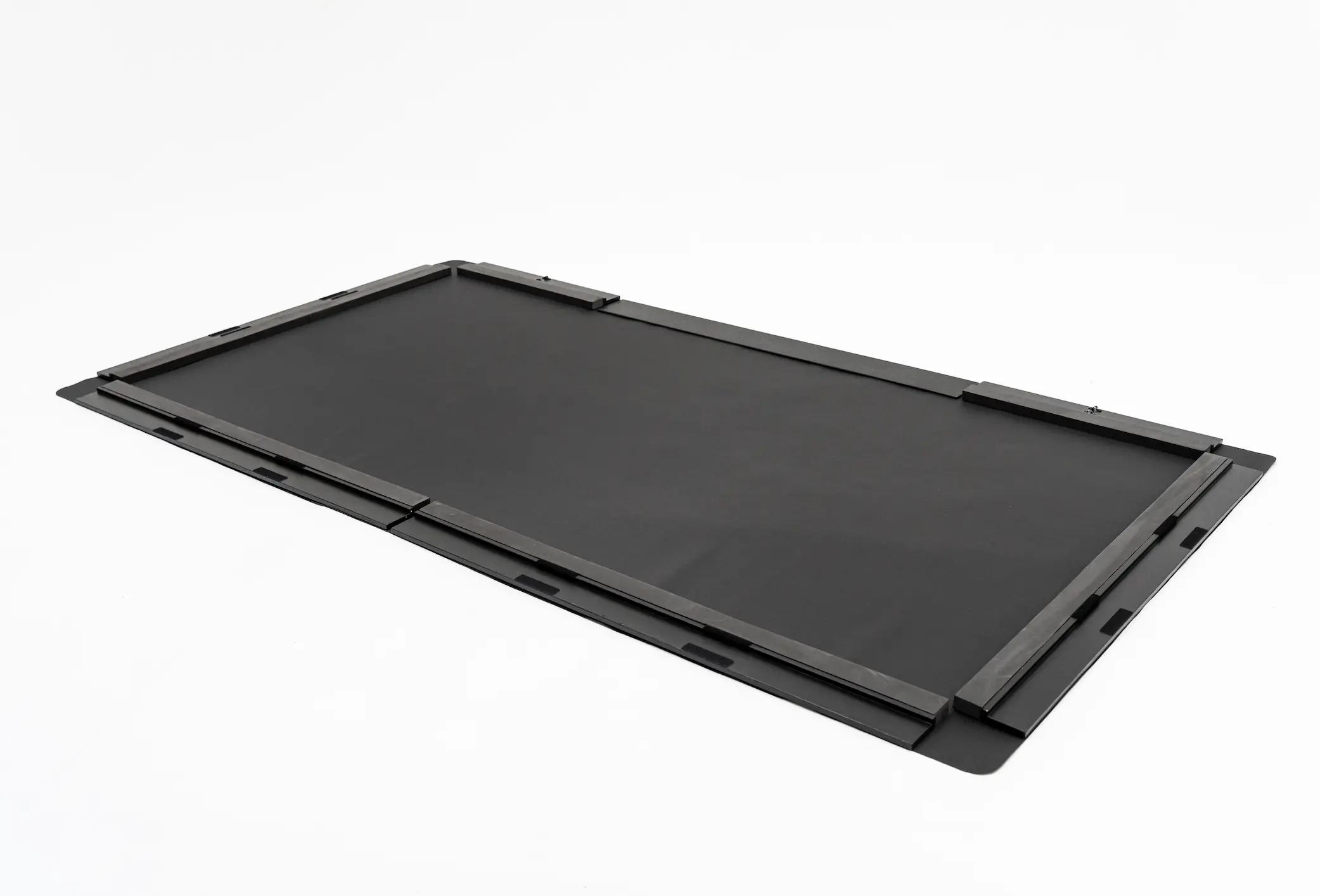
A hockey stick handling surface should give you smooth, repeatable puck control without making setup so annoying that nobody uses it. The right choice depends on whether you care most about shooting, skating simulation, portability, storage, or turning home stick handling into a game.
If the goal is daily stick handling reps in a house, garage, or basement, prioritize glide, stability, usable area, and cleanup. A surface that takes too long to assemble or is awkward to store often becomes another piece of training gear leaning against the wall.
The main surface options
Most home hockey surfaces fit into five groups.
| Surface type | Best for | Not best for | Setup and storage |
|---|---|---|---|
| Small shooting pad | Shooting mechanics, quick puck work, driveway use. | Full-range stick handling or game-style movement. | Easy to move, but limited area. |
| Roll-up shooting pad | Larger shooting and passing area. | In-home use where portability and small storage matter. | Can be clunky to roll out and does not roll up very tightly. |
| Dryland hockey tiles | Custom garage or basement layouts. | Fast setup and teardown. | Modular, but many pieces take time and space. |
| Synthetic ice tiles | Skating at home. | Quick stick handling sessions in shoes. | Highest commitment and usually the most permanent. |
| Danglemat | Daily stick handling, living-room practice, and portability. | Shooting. | Fastest when it rolls or packs as one system. |
What competitors usually optimize for
Shooting pads and dryland tiles are usually optimized for glide, durability, shooting support, and garage-style training. That is why product pages often emphasize weather resistance, stick protection, slick surfaces, and modular layouts.
Synthetic ice pages usually focus on skating realism. That can be great for a dedicated home rink, but it is a different decision than buying a quick stick handling surface for the living room.
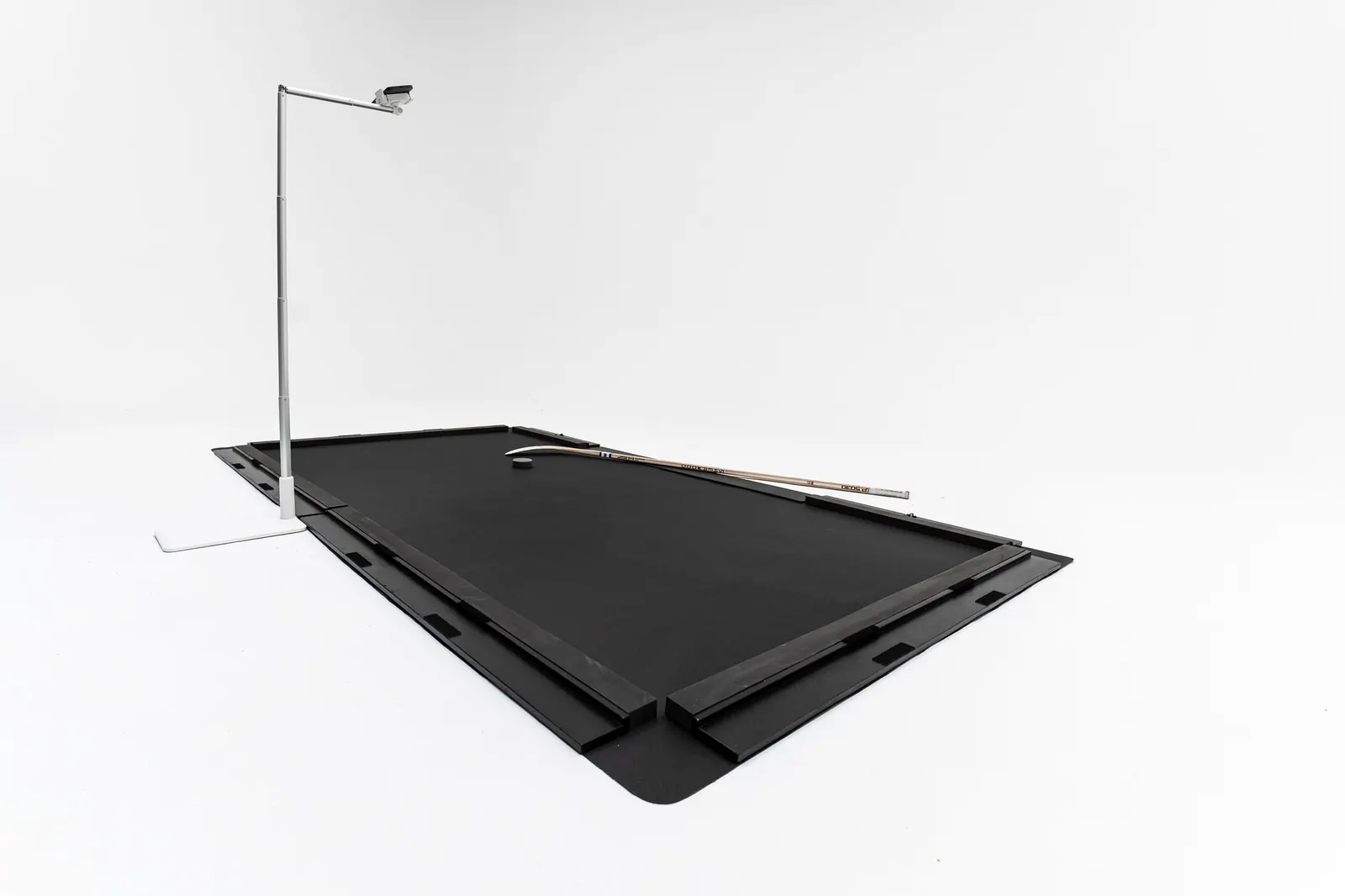
Danglemat was designed around a more specific problem: make off-ice stick handling easy enough to do inside the house, slick enough to feel like ice, and portable enough to pack away.
That soft, roll-up, mat-like form is one of its biggest differences from rigid pads and interlocking tiles. It is not trying to be a permanent garage floor. It is a stick handling surface that can come out for practice and disappear afterward.
How much space do you need?
The answer depends on the player and the drill. A very young player can get useful reps on a smaller surface, but older players and adults need room for full-range moves.
For stick handling, the key measurement is not just the product dimensions. It is the usable area where the puck can move without falling off, hitting a wall, or forcing the player to shorten every movement.
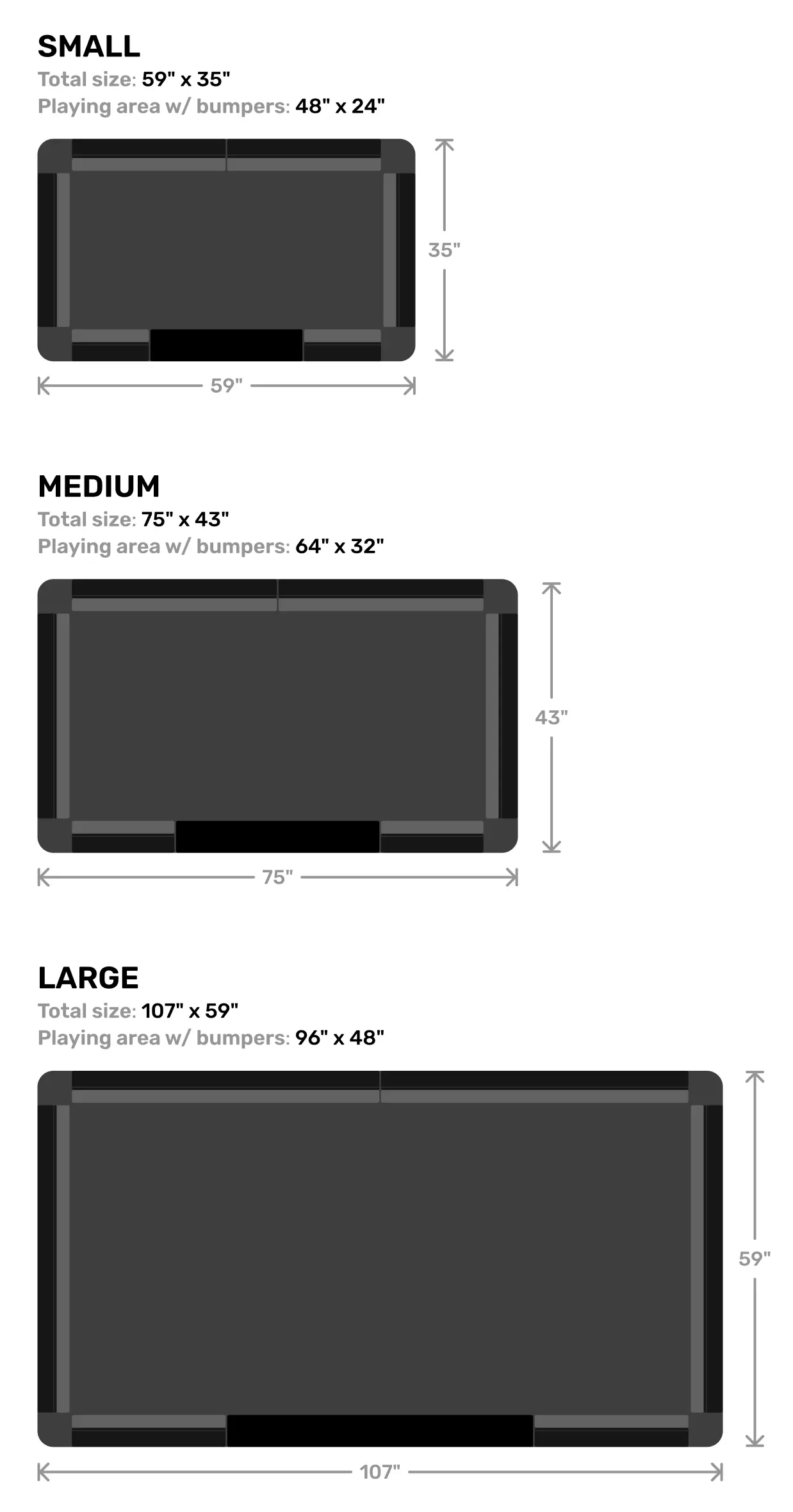
As a rule of thumb for Danglemat sizes:
- Small is for tight rooms, younger kids, and basic puck touches.
- Medium fits most rooms while still giving kids useful range.
- Large feels closer to a mini training zone and is best if the room can handle it.
Glide matters more than people think
Bad glide kills repetition. If the puck sticks, wobbles, or slows down too quickly, the player has to compensate instead of working on clean hands.
Many products claim an ice-like feel, but the puck-surface combination matters. Danglemat is sold with its companion puck because the surface and puck were designed together for stick handling glide.
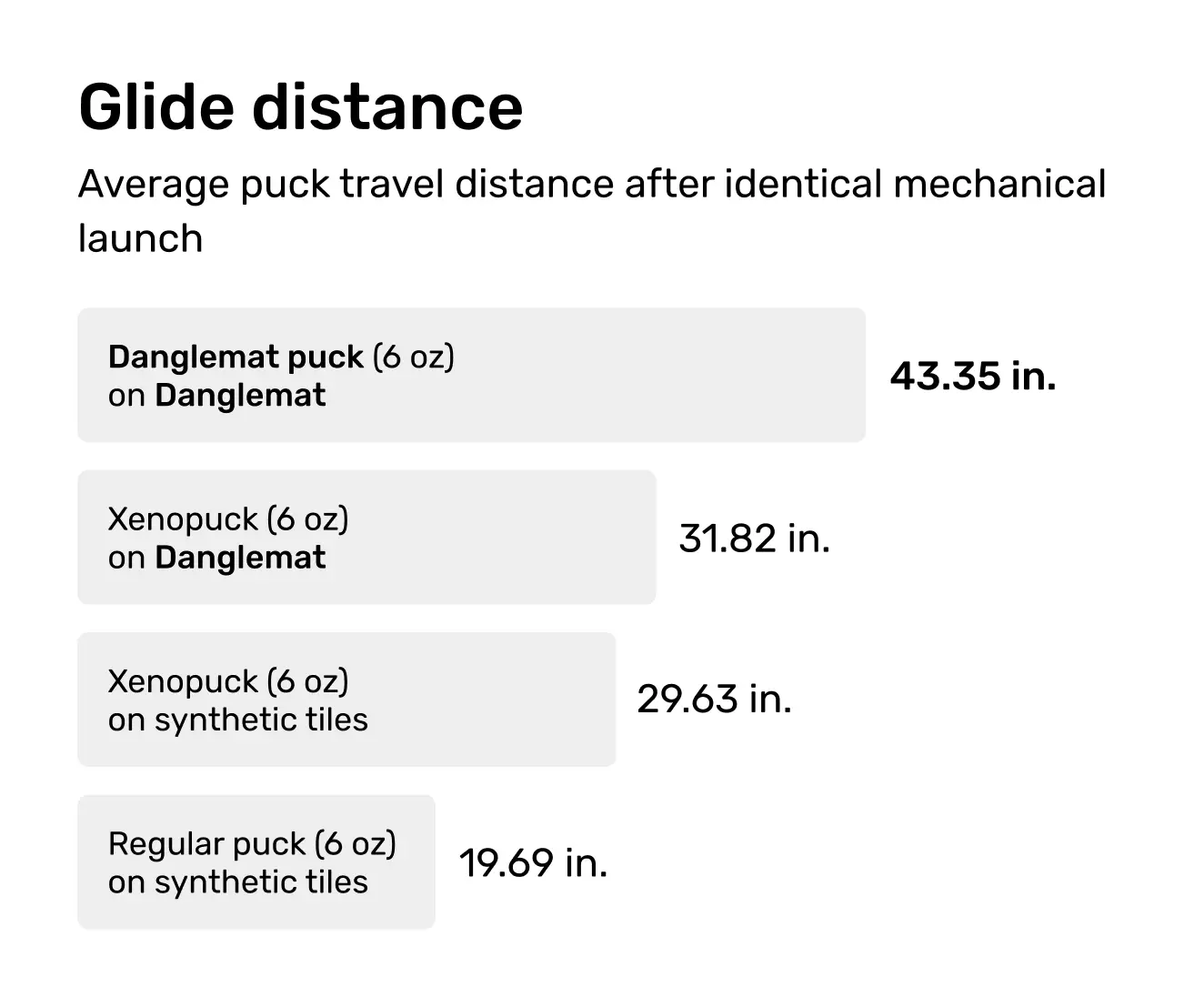
In our mechanical launch glide test, our puck on Danglemat traveled 43.35 inches. A 6 oz Xenopuck traveled 31.82 inches on Danglemat and 29.63 inches on synthetic tiles, while a regular 6 oz puck traveled 19.69 inches on synthetic tiles.
That means the puck on Danglemat traveled about 46% farther than the next best non-Danglemat combination we tested, the Xenopuck on synthetic tiles. It traveled about 120% farther than a regular puck on synthetic tiles, or a little more than twice as far.
Stability matters on real floors
Many players practice on hardwood, luxury vinyl plank, tile, carpet, garage floors, or basement floors. A surface that slides around can be frustrating and unsafe.
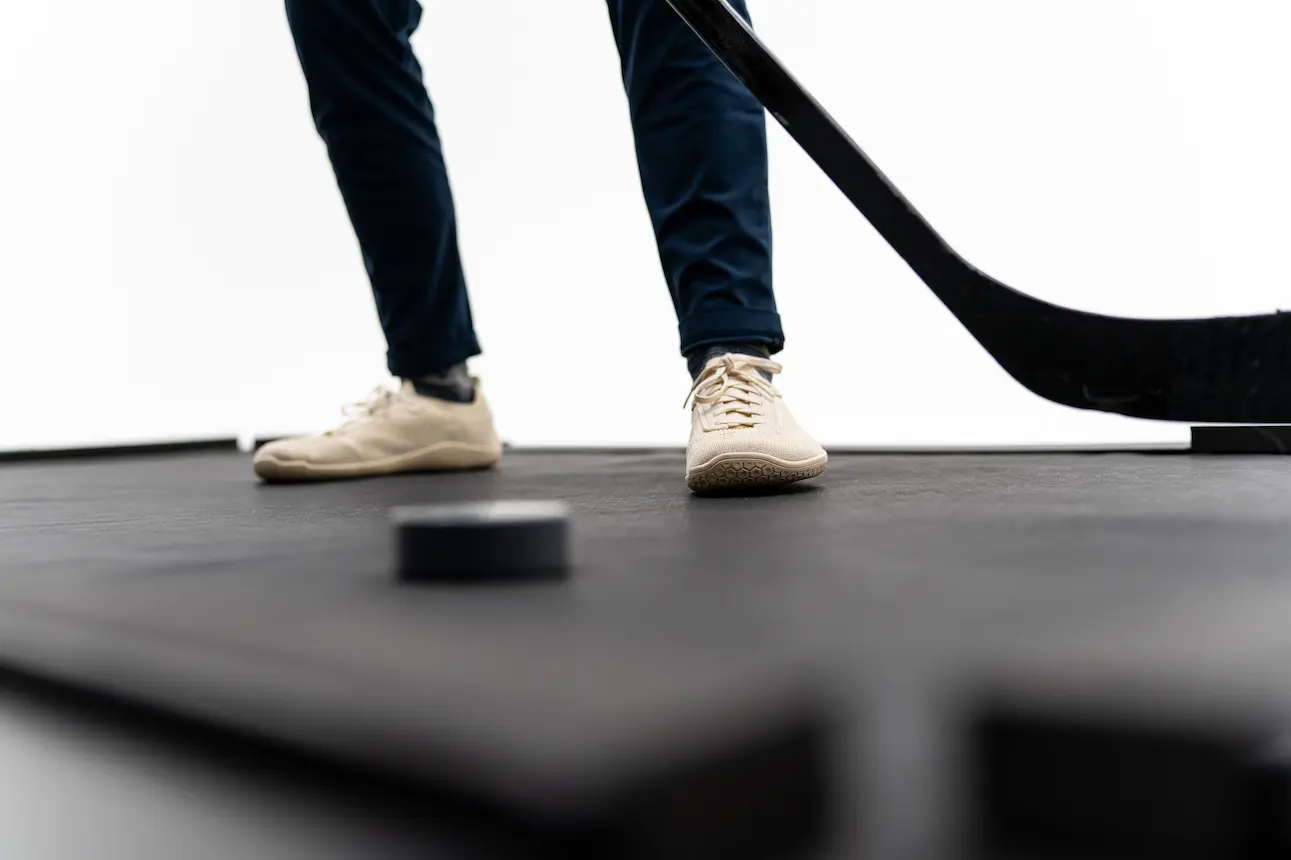
Danglemat uses a grippy underside so it can sit on normal home floors. Bumpers can add another layer of stability and keep the puck in play.
Roll-up surface vs. tiles
Tiles are strong when you want a semi-permanent training area. You can build a custom layout, replace individual pieces, and expand over time.
The downside is setup. Even a small tile setup means handling many pieces, aligning edges, carrying weight, and finding storage. That matters if the surface needs to disappear after practice.
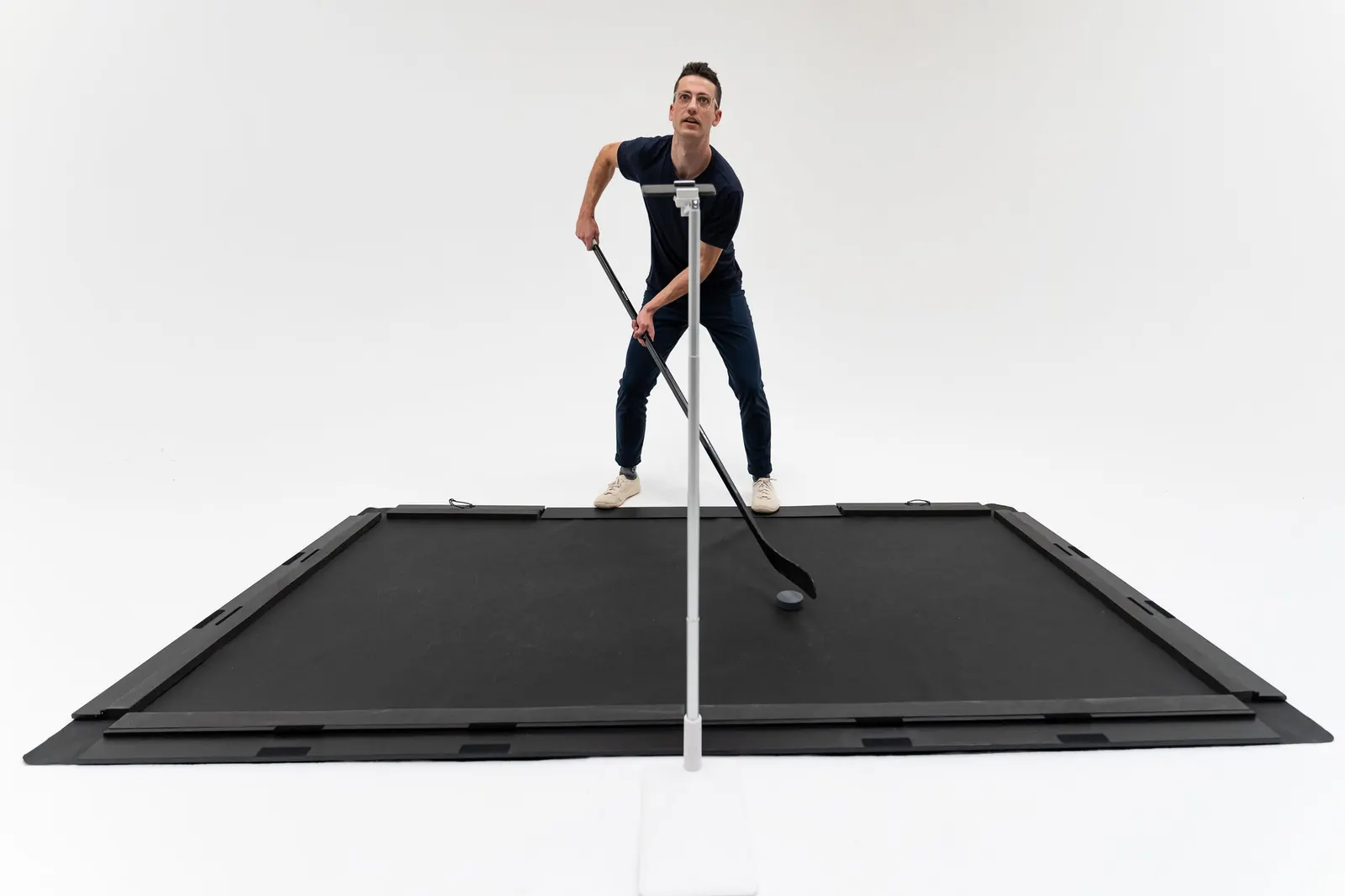
Danglemat is better when the goal is fast setup, fast cleanup, and a surface that can move between rooms. Tiles may be better when the goal is a permanent garage setup or a shooting zone that stays in place.
Stick handling surface vs. shooting pad
A shooting pad is usually the better choice if shooting is the main job. Pads are often built to handle repeated shots, stick blade wear, driveway use, and outdoor conditions.
Danglemat is a stick handling surface first. It is not currently recommended as a shooting pad, and the included puck should not be shot. If your main goal is slap shots, snapshots, and one-timers, buy a product made for shooting.
If your main goal is stick handling reps, quick hands, toe drags, puck control, and Dangleverse gameplay, Danglemat is the better fit.
Stick handling surface vs. synthetic ice
Synthetic ice is for players who want to skate at home. That is a bigger project, and it usually means more cost, more space, more maintenance, and a more permanent setup.
A stick handling surface is for players in shoes who want quick reps. It will not train edges, stride mechanics, or skating feel. It can, however, make it much easier to practice puck control every day.
Why bumpers change the experience
Bumpers make a stick handling surface feel more like a small rink. The puck comes back instead of sliding across the room, which keeps the player in rhythm.
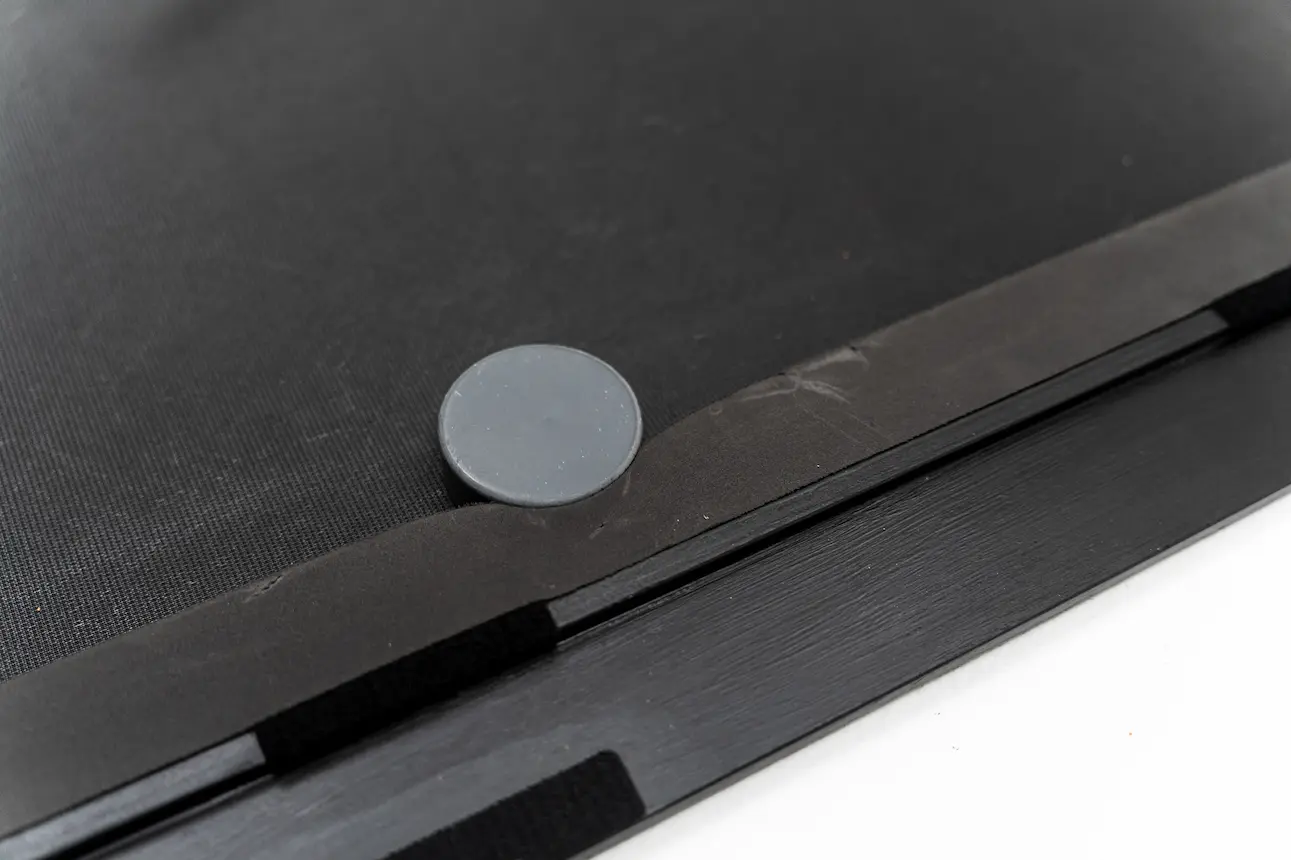
They also make a difference for kids because less time chasing the puck means more time touching it. If the setup will be used in a living room, basement, or bedroom, bumpers are one of the highest-value add-ons.
Best setup by goal
| Goal | Best surface choice | Why |
|---|---|---|
| Quick daily stick handling | Danglemat | Fast setup, strong glide, easy storage. |
| Video game-style training | Danglemat + Odd Man Rush | The system gives the puck a reliable surface for gameplay. |
| Shooting practice | Shooting pad or dryland tiles | These are built for repeated shooting impact. |
| Garage training zone | Dryland tiles | Modular and expandable if the setup can stay out. |
| Skating at home | Synthetic ice | Designed for skate use, not just shoes. |
| Tight apartment or bedroom | Small or medium Danglemat | Easier to store and safer than loose plastic sheets. |
Final recommendation
Choose a shooting pad if shooting is the priority. Choose dryland or synthetic tiles if you are building a dedicated garage or home-rink area. Choose Danglemat if you want a portable stick handling surface that can live in the house, pack away quickly, and pair with Odd Man Rush for game-based training.
For the most complete home stick handling setup, use a medium or large Danglemat, add bumpers, and pair it with Dangleverse. That gives the player a slick surface, puck returns, and a reason to keep practicing after the first few sessions.